
Structural Support for Sloped and Tiered Properties
Retaining Walls in Englewood for eroding slopes, uneven yard levels, and unstable soil conditions
The Lawn Man builds retaining walls throughout Englewood, New Jersey, for homeowners and commercial property managers dealing with elevation changes that cause soil erosion, drainage problems, or unusable sloped areas. You notice soil washing down the slope after heavy rain, garden beds sliding out of place, or sections of your yard too steep to maintain or use. Retaining walls hold back soil, create usable flat areas, and redirect water so it does not undermine foundations or landscaping.
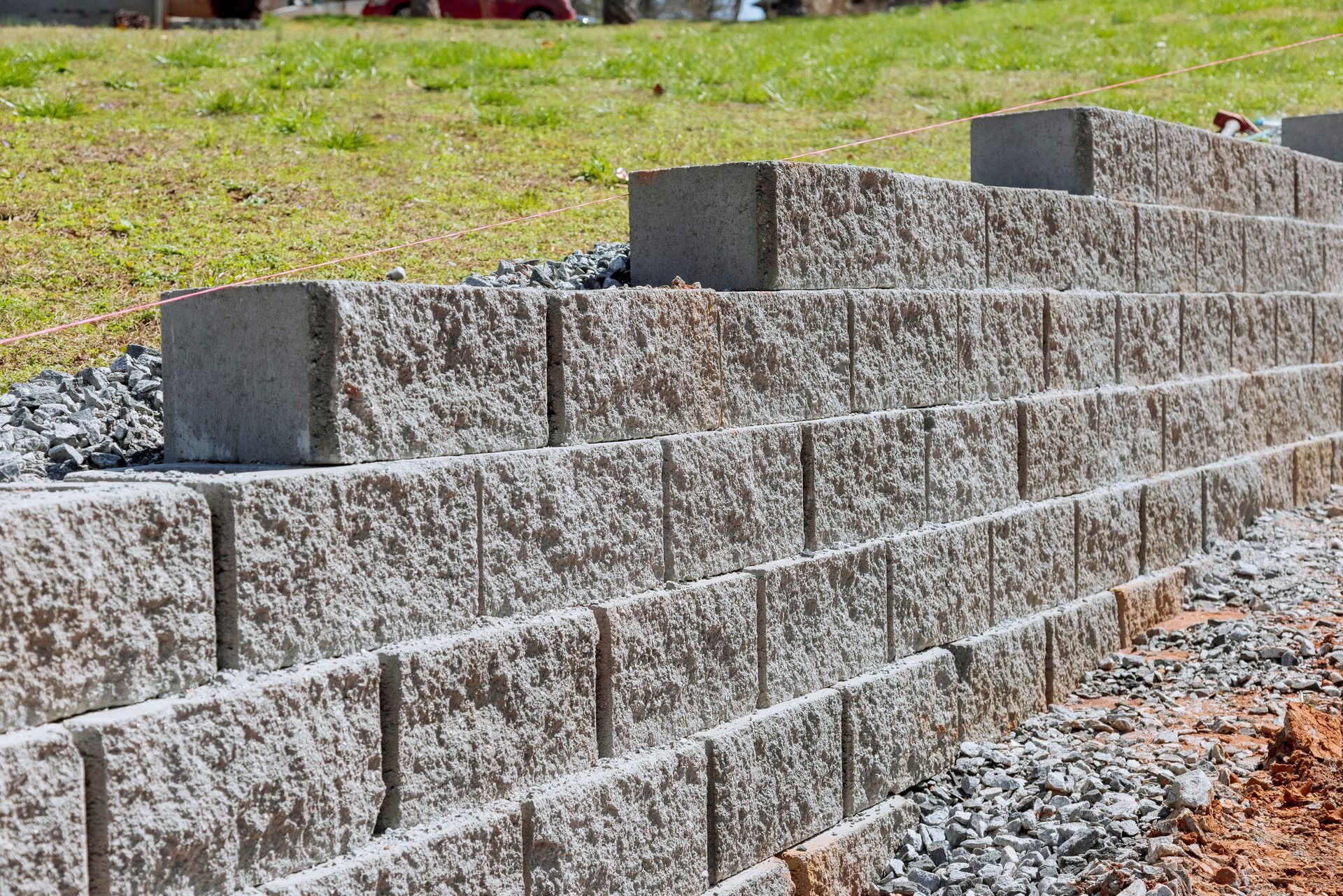
This service involves excavating the slope, installing a gravel base for drainage, and stacking durable wall blocks or stone in a pattern that distributes weight and resists soil pressure. Walls are built with a slight backward lean, known as batter, which adds stability. Drainage pipes and gravel backfill are placed behind the wall to prevent water buildup, which can cause shifting or failure over time. Retaining walls are functional structures first, but they also add visual definition to your property by creating clean lines and distinct planting zones.
Reach out to schedule a consultation and free estimate for retaining wall construction on your Englewood property.
How Retaining Walls Are Built and What They Correct
You will see the crew start by marking the wall location and excavating a trench below grade for the base course. The Lawn Man uses compacted gravel to create a level foundation, then begins stacking modular blocks or natural stone, checking alignment and height at each course. Geogrid fabric may be added between layers if the wall exceeds a certain height, anchoring the structure into the hillside. Drainage pipe is installed at the base, wrapped in filter fabric, and covered with gravel to channel water away from the wall.
Once the wall is complete, you notice the slope no longer sheds soil across your lawn or driveway. Water drains predictably instead of pooling at the base of the hill. The flat area behind or in front of the wall becomes usable space for planting, seating, or lawn. The Lawn Man ensures each wall is built to handle the load it will carry, with proper backfill and compaction to prevent settling.
Walls taller than four feet may require engineering review depending on local code and soil conditions. This service does not include grading work beyond the immediate wall footprint or relocation of existing utilities. Cap stones can be added for a finished look and to protect the top course from weathering. Projects are planned around access for equipment, proximity to property lines, and coordination with drainage systems already in place.
Questions About Retaining Wall Installation in Englewood
Property owners often ask these questions when planning retaining wall projects and evaluating structural needs.
What materials are used for retaining walls?
Walls are typically built with modular concrete blocks, natural stone, or timber, depending on the height, design preference, and budget. Gravel and drainage pipe are installed behind the wall to manage water and reduce pressure on the structure.
How tall can a retaining wall be without engineering?
Walls up to three or four feet are generally considered standard construction, but taller walls or those supporting heavy loads may require engineering and permits. Local codes in Englewood should be reviewed before starting the project.
Why is drainage important behind a retaining wall?
Water adds significant weight and pressure to soil, which can push the wall forward or cause it to lean. Proper drainage removes water from behind the wall, protecting the structure and extending its lifespan.
How long does it take to build a retaining wall?
Most residential retaining walls are completed within a few days to a week, depending on wall height, length, and site accessibility. Larger or multi-tiered walls take longer due to excavation and layering requirements.
What happens to the area behind the wall after installation?
You can backfill with soil, add plants, or create garden beds once the wall is complete. The flat area becomes stable and usable, with improved drainage and reduced erosion risk.
Contact The Lawn Man to review your slope conditions and receive a detailed estimate for retaining wall construction in Englewood.